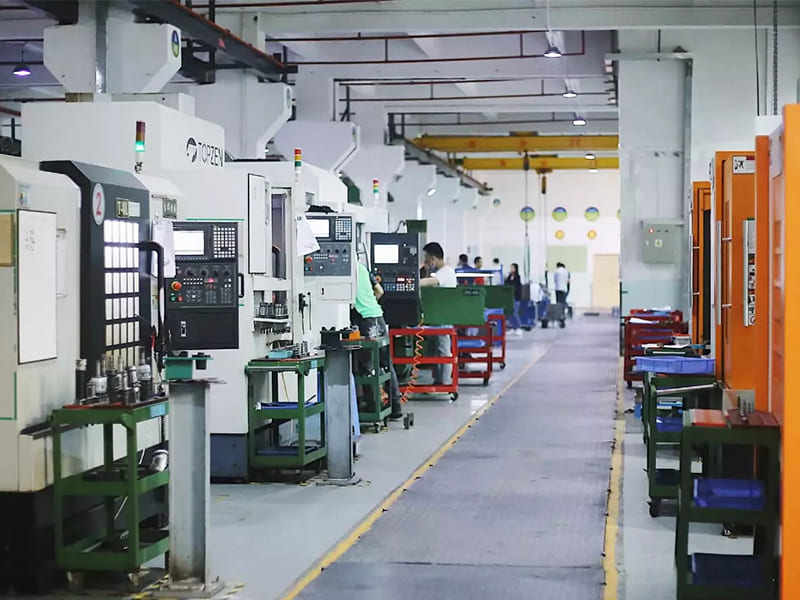
AISI 4130 steel, which is also called chromoly steel, is a low-alloy steel that is very useful because it has a great balance of strength, toughness, and weldability. Because it has chromium and molybdenum in it, it is much harder and more resistant to fatigue. This makes it a popular choice for aerospace parts, automotive components, and high-performance structural applications.
This guide gives a clear picture of what 4130 steel is made of, its main properties, how to heat-treat it, how easy it is to machine, and where it is commonly used. It is meant to help engineers and manufacturers quickly learn how to choose and work with 4130 steel to make parts that are strong and high-quality.
What is 4130 Steel?
AISI 4130, also known as chromoly steel 4130, is a low-alloy steel that gets its strength from chromium (Cr) and molybdenum (Mo). Adding Cr (0.8–1.1%) and Mo (0.15–0.25%) makes it stronger, harder, and tougher while still being easy to weld and machine. This steel is well-known in industries that need a balance of strength, ductility, and resistance to fatigue. It is classified as SAE/AISI 4130 and also known as UNS G41300. With a moderate carbon content of about 0.28–0.33%, it is a flexible material that can be used for structural parts, aerospace tubing, and high-performance mechanical parts.
Overview of Properties and Uses
4130 steel has a good balance of high strength, good fatigue resistance, and reliable weldability. Its mechanical properties can be greatly improved by heat treatments like quenching and tempering. In its normal state, it has good tensile and yield strength. When it is heat-treated, it becomes even harder and better able to bear weight. It can be easily machined and formed, especially when it is normalized or stress-relieved, which makes it good for precision parts that need tight tolerances.
4130 steel is used a lot in aerospace and automotive structures, motorsport frames and roll cages, hydraulic and machinery parts, and welded tubing or pressure vessels because it is strong, tough, and easy to work with. Because of these traits, it is a popular choice for engineering projects that need to be light, strong, and safe.
Chemical Composition and Microstructure
4130 Steel Composition
AISI 4130 steel is a low-alloy chromium-molybdenum steel with a carefully balanced chemical composition that provides a combination of strength, toughness, and machinability. Its typical composition is summarized in the following table:
| Element | Typical Content (%) | Role and Influence on Properties |
| Carbon (C) | 0.28–0.33 | Provides core strength and hardness; higher carbon improves hardenability but reduces ductility and weldability. |
| Chromium (Cr) | 0.8–1.1 | Increases tensile strength, hardness, and corrosion resistance; enhances hardenability. |
| Molybdenum (Mo) | 0.15–0.25 | Improves high-temperature strength, hardenability, and fatigue resistance; reduces temper brittleness. |
| Manganese (Mn) | 0.4–0.6 | Enhances tensile strength and hardenability; improves impact resistance. |
| Silicon (Si) | 0.15–0.35 | Supports deoxidation during steelmaking; contributes to strength. |
| Phosphorus (P) | ≤0.035 | Impurity element; excessive P can reduce toughness and ductility. |
| Sulfur (S) | ≤0.04 | Improves machinability in free-machining variants but may slightly reduce toughness. |
This alloying strategy makes 4130 steel easily machinable in the normalized condition while retaining the ability to be hardened through heat treatment to achieve high-strength structural components.
Microstructure Analysis
The microstructure of 4130 steel depends on thermal history and heat treatment:
-
As-rolled or normalized: Primarily composed of ferrite and pearlite, providing good ductility, toughness, and moderate strength.
-
Quenched and tempered: Produces tempered martensite, which significantly increases hardness and tensile strength while maintaining a balance of ductility.
-
Grain size: Fine-grained microstructures improve toughness and fatigue resistance, whereas coarse grains can reduce impact strength.
-
Secondary phases: Carbides of Cr and Mo are distributed throughout the matrix, contributing to wear resistance and dimensional stability under load.
The relationship between microstructure and mechanical properties allows engineers to tailor 4130 steel for applications that require high fatigue strength and toughness, such as aerospace tubing or automotive shafts.
Comparison with Other Alloy Steels
When compared to other low-alloy steels like 4140 and 4340, 4130 exhibits the following distinctions:
| Steel Grade | Carbon (%) | Alloying Elements | Typical Tensile Strength (MPa) | Key Characteristics | Typical Applications |
| 4130 | 0.28–0.33 | Cr 0.8–1.1, Mo 0.15–0.25 | 560–700 | Good machinability, weldability, moderate hardness | Aircraft tubing, shafts, structural components |
| 4140 | 0.38–0.43 | Cr 0.8–1.1, Mo 0.15–0.25 | 655–860 | Higher hardness and strength, moderate toughness | Gears, crankshafts, axles |
| 4340 | 0.38–0.43 | Ni 1.65–2.0, Cr 0.7–0.9, Mo 0.2–0.3 | 745–930 | Excellent toughness, fatigue, and wear resistance | Aerospace components, high-load shafts, heavy machinery |
From a design perspective, 4130 steel is ideal for applications requiring machinability and moderate strength, while 4140 or 4340 may be preferred for high-strength or high-fatigue-demanding parts. Procurement managers can also weigh cost vs. performance, as 4130 typically offers a more economical option without compromising essential structural integrity.
Physical and Mechanical Properties
Physical Properties
AISI 4130 steel, as a low-alloy chromium-molybdenum steel, exhibits physical characteristics that are crucial for engineering design and thermal calculations. Typical values are summarized in the table below:
| Property | Typical Value | Notes |
| Density | 7.85 g/cm³ | Standard for low-alloy steels, relevant for weight-sensitive applications. |
| Melting Point | 1450–1500 °C | Useful for heat treatment and welding parameter design. |
| Thermal Conductivity | 42 W/m·K | Moderate heat dissipation during machining or high-load applications. |
| Linear Thermal Expansion Coefficient | 12 × 10⁻⁶ /°C | Important for dimensional stability under temperature variations. |
| Specific Heat Capacity | 460 J/kg·K | Relevant for thermal stress calculations during welding or quenching. |
These properties provide engineers with a foundation for thermal management, weight calculations, and process optimization, particularly in aerospace, automotive, and machinery applications where 4130 steel is commonly used.
Mechanical Properties
The mechanical behavior of 4130 steel is influenced by heat treatment. Typical values for normalized and quenched & tempered conditions are shown below:
| Property | Normalized | Quenched & Tempered | Notes |
| Tensile Strength | 560–700 MPa | 850–1000 MPa | Strength increases significantly after quenching & tempering. |
| Yield Strength | 460–600 MPa | 700–880 MPa | Important for structural design and load-bearing calculations. |
| Elongation (%) | 20–25% | 12–15% | Reflects ductility; decreases as hardness increases. |
| Hardness (Brinell) | 170–210 HB | 230–300 HB | Can be tailored via tempering to balance toughness and wear resistance. |
| Fatigue Strength | ~310 MPa | ~450 MPa | Depends on surface finish and stress concentration; critical for rotating shafts and aerospace components. |
These values provide engineers and designers with a clear reference for selecting 4130 steel for load-bearing, fatigue-sensitive, or high-stress applications, while machining and fabrication teams can anticipate material behavior during processing.
Stress, Temperature, and Fatigue Behavior
4130 steel exhibits excellent performance across a range of temperatures:
-
High-temperature behavior: Yield and tensile strength decrease moderately at elevated temperatures (<400 °C), but Cr-Mo alloying enhances creep and thermal stability compared to plain carbon steels.
-
Low-temperature toughness: Maintains ductility and impact resistance down to cryogenic conditions, suitable for aerospace and high-speed machinery components.
-
Fatigue life: Surface finish, notch sensitivity, and heat treatment critically affect fatigue performance. Quenched and tempered 4130 achieves superior fatigue resistance, making it ideal for rotating shafts, gears, and structural tubing.
-
Stress relaxation: Proper tempering mitigates residual stress, preventing deformation or cracking in precision components.
Overall, the combination of moderate density, high strength, and excellent fatigue and thermal properties makes 4130 steel a versatile choice for engineering applications requiring both mechanical reliability and manufacturability.
Heat Treatment and Hardening
Annealing and Stress Relieving
Annealing and stress relieving are critical pre-processing steps for 4130 steel to ensure dimensional stability and uniform mechanical properties.
-
Annealing: Typically performed at 815–870 °C followed by slow furnace cooling. This process softens the steel, refines the microstructure, and improves machinability for complex parts such as shafts, gears, and tubing.
-
Stress Relieving: Carried out at 590–650 °C after cold forming or welding to reduce residual stresses without significantly affecting hardness. This helps prevent distortion and cracking during subsequent machining or heat treatment stages.
For engineers and design teams, these processes ensure that tolerance-critical components maintain dimensional stability, reducing the risk of rework and scrap.
Hardening and Tempering
4130 steel achieves its high strength through quenching and tempering, leveraging its chromium and molybdenum content for hardenability and wear resistance.
-
Quenching: Typically in oil or water at 815–860 °C. Rapid cooling transforms austenite into martensite, dramatically increasing tensile and yield strength.
-
Tempering: Conducted at 400–650 °C depending on the desired balance of hardness, toughness, and fatigue resistance. Higher tempering temperatures reduce hardness but improve ductility and impact resistance, critical for high-stress components.
A typical hardness range post-quench and temper for 4130 steel is 28–32 HRC, which can be adjusted to suit applications like structural tubing, sprockets, and high-load shafts.
Optimization for Precision Components
For precision engineering applications, combining careful heat treatment with machining strategy is key:
-
Pre-machining stress relief reduces distortion in components with complex geometries.
-
Post-machining tempering can be applied to restore toughness while maintaining dimensional accuracy.
-
Controlled quench with uniform cooling prevents warping or cracking, especially in long shafts or thin-walled parts.
By optimizing the heat treatment sequence, engineers and fabricators can achieve tight tolerances, consistent mechanical performance, and improved fatigue life, which is crucial for aerospace, automotive, and high-performance industrial components.
This integrated approach allows 4130 steel to deliver both machinability and structural reliability, ensuring components meet design specifications and long-term service requirements.
Machinability and Fabrication
Machining Characteristics
4130 steel is a medium-strength low-alloy steel with moderate machinability. Its chromium and molybdenum content enhances hardenability but requires careful tool selection and cutting parameters to maintain precision.
-
Cutting Performance: Machining 4130 steel in the annealed or stress-relieved condition improves chip formation and reduces tool wear.
-
Recommended Tooling: High-speed steel (HSS) or carbide-tipped tools are commonly used. For high-volume production, coated carbide inserts offer superior wear resistance.
-
Cutting Speeds and Feeds: For turning, recommended speeds are 40–70 m/min with appropriate feed rates (0.15–0.35 mm/rev). Milling speeds of 20–40 m/min are typical. Coolant or cutting fluids are strongly recommended to minimize heat buildup and prevent work hardening.
-
Machining Strategies: Roughing passes are done first to remove bulk material, followed by finish passes to achieve tight tolerances and smooth surface finishes, especially for shafts, gears, and structural components.
Welding and Forming Considerations
4130 steel exhibits good weldability, but attention to pre- and post-weld treatment is critical due to its alloy content.
-
Welding: Gas tungsten arc welding (GTAW/TIG) or shielded metal arc welding (SMAW) is recommended. Preheating at 150–200 °C minimizes cracking, and post-weld tempering restores toughness.
-
Forming: Cold forming is feasible in the annealed state, allowing for bending, drawing, or rolling. For heavy-duty or tight-radius bends, hot forming or localized heating is advised to reduce springback and surface cracking.
Tolerance and Dimensional Control
Maintaining tight dimensional tolerances in 4130 steel requires a combined approach of heat treatment, machining strategy, and quality control.
-
Tolerance Control: Allow for minimal machining allowances to compensate for stress relief and potential warping during quenching.
-
Dimensional Stability: Components with complex geometries, such as gear blanks or tubular structures, may require intermediate stress-relieving cycles to reduce distortion.
-
Best Practices: Utilize precision fixturing, consistent cutting parameters, and temperature-controlled environments to enhance repeatability. Finish grinding or honing may be required for high-precision shafts or mating surfaces.
By carefully integrating machinability, welding, forming, and tolerance control, engineers and fabricators can fully leverage 4130 steel’s mechanical performance while ensuring precision, reliability, and long-term service life in demanding applications.
Surface Treatments and Corrosion Resistance
Importance of Surface Treatment
Although 4130 steel offers excellent strength and toughness, its low inherent corrosion resistance makes surface protection essential in many industrial applications. Surface treatments are critical for:
-
Enhancing corrosion resistance: Preventing rust in humid, chemical, or outdoor environments.
-
Improving wear resistance: Reducing abrasive wear in shafts, gears, and bearings.
-
Extending fatigue life: Minimizing micro-cracks and surface stress concentrators that could propagate under cyclic loading.
Proper surface engineering allows 4130 steel components to maintain mechanical performance while meeting environmental and longevity requirements.
Common Surface Treatments
Several surface modification techniques are commonly applied to 4130 steel:
| Surface Treatment | Description | Performance Impact |
| Shot Peening | High-velocity impact of small media creates compressive surface stresses | Improves fatigue strength, reduces crack initiation |
| Nitriding | Diffusion of nitrogen into the surface at 500–550 °C | Increases surface hardness, wear resistance, slight corrosion resistance improvement |
| Electroplating (Ni/Cr) | Depositing nickel or chromium layers | Enhances corrosion resistance, surface smoothness, aesthetic finish |
| Polishing / Grinding | Mechanical surface smoothing | Reduces stress concentrators, improves fatigue and wear performance |
Each method should be selected based on application requirements, balancing cost, performance, and manufacturing feasibility.
Performance Enhancement
Surface treatments significantly influence the service life and reliability of 4130 steel components:
-
Fatigue Performance: Shot peening can increase fatigue strength by 20–40%, especially in high-stress regions like crankshafts or connecting rods.
-
Wear Resistance: Nitriding improves surface hardness up to 700–900 HV, reducing abrasion in high-contact components.
-
Corrosion Resistance: Electroplating and passivation layers provide a protective barrier, extending the lifespan of components exposed to moisture or mild chemicals.
By combining mechanical performance and tailored surface treatments, engineers can optimize 4130 steel for demanding applications, ensuring long-term reliability, reduced maintenance costs, and high precision in industrial, automotive, and aerospace components.
Applications of 4130 Steel
Industrial Applications
4130 steel is widely used across aerospace, automotive, oil and gas, and general machinery industries due to its high strength-to-weight ratio, toughness, and excellent heat treatment response. Typical industrial applications include:
-
Oil & Gas Equipment: Shafts, couplings, and pressure vessels that require high mechanical strength under cyclic loads.
-
Heavy Machinery Components: Gears, crankshafts, and structural frames where durability and fatigue resistance are critical.
-
Aerospace Fixtures and Tooling: Support brackets and jigs needing dimensional stability and high load-bearing capacity.
The versatility of 4130 steel allows it to be used in components that must endure high stress, moderate corrosion, and repeated loading cycles.
Automotive and Aerospace Components
In automotive and aerospace sectors, 4130 steel is prized for critical structural and high-performance components:
-
Automotive Applications: Roll cages, drive shafts, control arms, and high-strength fasteners. Heat-treated 4130 provides enhanced yield strength and fatigue life, ensuring safety in crash or high-load scenarios.
-
Aerospace Applications: Airframe structures, landing gear parts, and wing spars. Its low alloy composition with Cr-Mo enhancement allows for excellent weldability, formability, and weight-optimized design without sacrificing strength.
Careful integration of heat treatment and surface engineering ensures these components maintain performance under dynamic loads and environmental stressors.
Selection Guidelines for Engineers
When specifying 4130 steel, engineers should consider:
-
Performance Requirements: 4130 is ideal for parts requiring high tensile strength, fatigue resistance, and moderate corrosion resistance.
-
Alternatives: For higher hardness or wear resistance, 4140 or 4340 alloy steels may be more appropriate; for lightweight applications with corrosion resistance, consider aluminum alloys or stainless steels.
-
Cost and Fabrication: 4130 offers a good balance of cost, machinability, and heat treatment flexibility, making it suitable for high-performance yet economical components.
By evaluating mechanical properties, application environment, and manufacturing constraints, designers and procurement managers can select 4130 steel to maximize component reliability, safety, and lifecycle performance.
Summary
4130 steel is a strong and tough chromium-molybdenum alloy that responds well to heat treatment. It has a high strength-to-weight ratio. It has good fatigue resistance and can be easily machined and welded. Its mechanical performance ranges from 560 to 700 MPa when it is annealed and 900 to 1000 MPa when it is quenched and tempered. Because of these qualities, it can be used in aerospace structures, automotive parts, heavy machinery parts, and other engineering projects that need high performance.
But because it doesn’t resist corrosion very well and is sensitive to residual stress, it needs to be heat-treated, stress-relieved, and protected from the surface, like by plating or nitriding. Engineers can make the material last longer, work better, and be more reliable in the long run by carefully planning how to control heat treatment, manage dimensional tolerances, and finish it properly.
FAQ
What are the main advantages of 4130 steel?
4130 steel is valued for its high strength-to-weight ratio, toughness, and fatigue resistance. It offers excellent machinability and weldability, and can be heat treated to achieve a balance between hardness and ductility. These properties make it ideal for structural, automotive, aerospace, and industrial applications.
How does 4130 steel compare with 4140 or 4340 steel?
4140 Steel: Contains higher carbon and chromium content, giving it greater hardness and wear resistance, but slightly reduced weldability and machinability compared to 4130.
4340 Steel: A nickel-chromium-molybdenum alloy with superior toughness, strength, and fatigue resistance, typically used in high-stress aerospace and heavy machinery components.
4130: Offers a balanced combination of strength, toughness, and manufacturability, making it more suitable for applications requiring ease of fabrication and cost-effectiveness.
Can 4130 steel be welded or heat treated?
Yes. 4130 is highly weldable, especially with preheating (150–200°C) and post-weld stress relief to prevent cracking. It also responds well to heat treatment, including annealing, normalizing, quenching, and tempering, allowing engineers to adjust hardness, tensile strength, and toughness according to application needs.
How does surface treatment affect 4130 steel performance?
Surface treatments like nitriding, plating, black oxide coating, or shot peening can significantly enhance corrosion resistance, wear resistance, and fatigue life. For high-stress or corrosive environments, proper surface engineering is critical to prolong component service life.
What are typical industrial applications of 4130 steel?
4130 steel is widely used in:
Aerospace: Aircraft frames, landing gear components, and structural supports.
Automotive: Chassis, drive shafts, and high-performance suspension parts.
Industrial Machinery: Shafts, gears, and pressure vessels.
Oil & Gas: Drill collars, pump shafts, and structural supports in high-stress environments.
Its combination of strength, toughness, and fabrication versatility makes 4130 steel a reliable choice for engineers, designers, and procurement professionals across multiple industries.
About the Author: Gavin Xia

This article was written by engineers from the RAPID PROTOS team. Gavin Xia is a professional engineer and technical expert with 20 years of experience in rapid prototyping, metal parts, and plastic parts manufacturing.