CNC ( computer numerical control) technology is very important in modern manufacturing. It’s used a lot in automotive, aerospace, and electronic equipment manufacturing. This helps boost productivity and make products more accurate. This article aims to clearly explain CNC operations. It covers machining operations, processes, types of machine tools, materials it can work with, and its benefits. The goal is to help people interested in CNC quickly understand the main ideas.
What is CNC Machining?
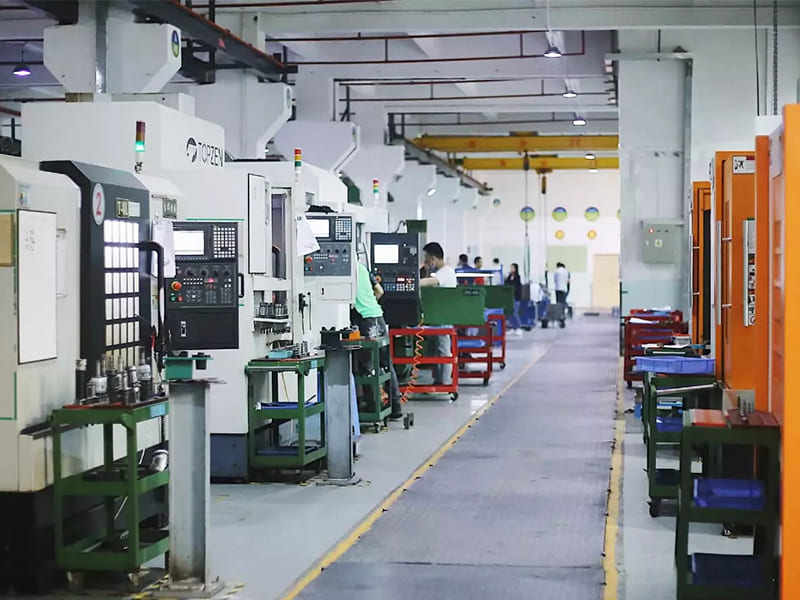
CNC machining (CNC stands for Computer Numerical Control) is an automated machining technology in modern manufacturing. It’s both highly precise and efficient. First, it takes design drawings and turns them into instructions that the computer can control. These instructions then tell CNC machine tools what to do. The machine tools can carry out processes like cutting, drilling, and milling. With this technology, all kinds of parts with complex shapes and high precision requirements can be made accurately.
What are the different types of CNC machining operations?
Turning
Definition and principle: The workpiece is rotated by the machine tool spindle, and the tool moves along a specific path to cut and change the shape of the workpiece.
Application scenarios: Manufacturing shaft and disc parts, such as crankshafts of automobile engines, gear blanks of various machines, etc.
Example: For example, take the manufacturing of a simple stepped shaft as an example to explain the turning processing steps and effects.
First, put a cylindrical piece of raw material on the spindle of the CNC lathe. Start the machine, and let the spindle make the raw material spin quickly. Next, use the CNC system to set the path the tool will follow. Then, the tool starts moving towards the spinning raw material to do the cutting. The tool starts at one end and slowly cuts away the extra material. This makes the shaft’s diameter get smaller bit by bit, just like the design asks. It forms a stepped shape with different diameters. During this, the CNC system will control every move of the tool very carefully to make sure the sizes are accurate. Finally, after a bunch of cutting operations, a simple stepped shaft that meets the requirements is made. The stepped shaft made this way has exact dimensions and a fairly smooth surface. It can be used for further processing later or directly put into mechanical equipment.

Milling
Definition and Principle : The milling cutter rotates to perform the main motion, while the workpiece or the milling cutter moves in a feeding motion to remove the excess material from the workpiece.
Application Scenarios: It is used to process various – shaped parts such as planes, grooves, and gears. It is often applied in mold manufacturing and mechanical parts processing.
Example: Take the processing of a rectangular mold cavity as an example to explain the milling process and its implementation method.
First, fix a suitable material for the mold, such as a metal block, on the worktable of a CNC milling machine. At this time, select a proper milling cutter and install it on the milling machine. Then the milling cutter starts to rotate at a high speed. Set the movement path of the milling cutter through the CNC system. The milling cutter begins from the surface of the mold material and cuts downward bit by bit along the outline of the rectangle, just like digging a ditch along a drawn line in the field, removing the material inside the rectangular outline layer by layer. During this process, adjust parameters such as the rotational speed and feed rate of the milling cutter according to the hardness of the material and processing requirements to ensure cutting accuracy and efficiency. For example, if the material is relatively hard, slow down the rotational speed of the milling cutter appropriately and also reduce the feed rate to avoid the milling cutter wearing out too quickly or causing processing errors. After cutting to a certain depth along the rectangular outline, conduct fine – processing inside the cavity to make the bottom surface flatter and the side surfaces more vertical. Eventually, a rectangular mold cavity that meets the requirements is processed. Through such a milling process, under the precise control of CNC operation, rectangular mold cavities that meet various production needs can be manufactured.

Drilling
Definition and Principle: Holes are processed on workpieces using a drill bit. The drill bit rotates and feeds axially into the workpiece.
Application Scenarios: It is used for hole processing on various parts, such as via holes on circuit boards and connection holes for mechanical assembly.
Example: Take the processing of multiple equidistant holes on a metal plate as an example to explain the key points of drilling.
First, before CNC operation, select a suitable drill bit according to the material and thickness of the metal plate, as well as the size and depth requirements of the holes. For example, if the metal plate is thick, a longer and more robust drill bit is needed. After choosing the drill bit, install it on the drilling machine, and then firmly fix the metal plate on the worktable of the drilling machine to ensure that the metal plate does not shake during processing. Next, set the position of each hole through the CNC system. For equidistant holes, accurate calculations are required to ensure that the distance between each hole is exactly the same. After setting the positions, set the rotational speed and feed rate of the drill bit. Generally, if the metal material is hard, the rotational speed of the drill bit should be relatively slow, and the feed rate should not be too fast, otherwise, the drill bit is likely to be damaged or the hole size may be inaccurate. Once everything is ready, start the drilling machine. The drill bit begins to rotate and drill down into the metal plate. After drilling one hole, the drill bit lifts up and moves to the next set position to repeat the drilling operation until all equidistant holes are processed. During this process, always pay attention to the state of the drill bit. If the drill bit is found to be severely worn, replace it in a timely manner to ensure that the processing quality of each hole can meet the standard. These are the key points of drilling when processing multiple equidistant holes on a metal plate in CNC operation.

Grinding
Definition and Principle: A grinding tool (such as a grinding wheel) is used to cut the surface of a workpiece at a high linear speed to obtain a high – precision surface.
Application Scenarios: It is used in situations where high surface accuracy and finish of parts are required, such as in the manufacture of precision bearings and gauges.
Example: Take the grinding of a high – precision journal surface as an example to introduce the function and operation of grinding.
The journal is a crucial part of the shaft. It needs to fit closely with other components, so extremely high requirements are placed on its surface accuracy and smoothness.
During the grinding process in CNC operation, first, firmly fix the shaft blank with the journal on the grinding machine, just like finding it a stable “seat”. Then, select an appropriate grinding wheel and install it on the grinding wheel spindle of the grinding machine. The coarseness of the grinding wheel should be determined according to the processing requirements of the journal. If it’s rough grinding, choose a relatively coarser grinding wheel to quickly remove more material. For finish grinding, a finer grinding wheel is needed to further improve the surface accuracy and smoothness.
Once everything is ready, start the grinding machine. The grinding wheel begins to rotate at high speed and slowly approaches the surface of the journal for grinding. During the grinding process, the grinding machine will precisely control the movement path and feed rate of the grinding wheel according to the pre – set program. For example, at the beginning, the grinding wheel may be allowed to penetrate more to quickly grind off the excess material on the journal surface. When approaching the final size, the feed rate will be reduced for fine polishing, just like giving the journal a “skin care”, making the surface smooth and flat.
The function of grinding is to make the journal surface achieve extremely high accuracy and smoothness. In practical use, when the journal cooperates with other components, this can reduce friction, lower wear, and improve the operational stability and service life of the entire equipment. Through this example, you can understand the importance of grinding in CNC operation.

The Steps of CNC Machining Operation
1. Design Drawings
Design drawings are crucial for CNC machining. They must clearly and accurately state important information such as the dimensions, shape, and tolerances of the parts. For example, when manufacturing precision shaft – type parts, the diameter, length, dimensions of each step, as well as the tolerance ranges of roundness and cylindricity should be precisely marked on the drawing, providing clear guidance for processing. Moreover, the drawing should strictly follow the mechanical drawing standards, with clear and accurate markings that conform to general guidelines. During the design process, the manufacturability should also be considered to ensure that the design plan can be implemented.
2. Process Planning
Process planning involves two main tasks. First is arranging the machining sequence. Based on the structure and technical requirements of the part, determine what to do first and what to do later. Usually, rough machining is carried out first to remove a large amount of excess material, which improves the machining speed. Then, finish machining is performed to ensure accurate dimensions and surface quality. For example, when machining a complex mold, rough milling is done first to roughly shape it, and then finish milling is carried out to achieve high precision. Second is selecting tools and parameters. According to the characteristics of the material such as hardness and toughness, as well as the type of machining like turning and milling, choose appropriate tools. Then, reasonably determine the cutting speed, feed rate, and depth of cut. For instance, when machining hard alloy steel, select carbide tools, slow down the cutting speed appropriately to extend the tool life and ensure machining quality.
3. Programming
Programming consists of two aspects. Firstly, one needs to understand CNC programming languages such as G – codes and M – codes. G – codes are used to control the movement path of the machine tool’s cutting tool. They can make the cutting tool move in a straight line, along an arc, etc. M – codes control the auxiliary functions of the machine tool, for example, starting or stopping the spindle, turning on or off the coolant. For instance, G01 can make the cutting tool move in a straight line to a specified position at a set speed, and M03 can start the spindle to rotate in the forward direction. Secondly, it is about writing the machining program. According to the previously planned process, carefully write the program which should include the cutting tool path, motion control instructions, etc. The program must be accurate so that the machine tool can process according to the预定 steps and parameters, ensuring the machining accuracy and quality of the parts.
4. Fixturing and Tool Setting
Based on the shape, size, and machining requirements of the part, choose a suitable clamping method from options like vise clamping, chuck clamping, and clamp – plate clamping to firmly fix the part on the machine tool. Otherwise, if the part moves during machining, the machining accuracy will be lost. For example, small square parts are commonly clamped using a vise, while chuck clamping is more suitable for rotary parts.
After that, tool – setting operations need to be carried out. Methods such as using a tool – setting gauge or trial – cutting for tool setting can be employed to accurately determine the relative position between the tool and the workpiece. The accuracy of tool setting directly affects the machining accuracy of the part, and it is an essential step in CNC machining.
5. Machining and Monitoring
First, start the machining process. Input the carefully written and checked program into the machine tool control system. After confirming that all parameters are correct, turn on the machine to officially machine the part.
During machining, real – time monitoring and handling are necessary. Rely on the machine tool’s built – in monitoring system. For example, use sensors to monitor the tool condition and machining parameters. Operators themselves also need to pay attention to the machining situation. If it is found that the tool is worn, the workpiece is loose, or the cutting parameters are incorrect, take immediate measures. For instance, replace the tool, re – fix the workpiece, or adjust the parameters to ensure smooth machining and qualified part quality.
6. Machining Completion and Quality Inspection
After the machine tool has completed all the machining steps according to the program, the part is initially machined. At this time, carefully remove the part from the machine tool and clean off impurities such as residual chips and coolant on its surface. Then, conduct quality inspections. Use measuring tools such as calipers, micrometers, and coordinate measuring machines to check if the part’s dimensions match the requirements of the design drawing. Employ a surface roughness tester to evaluate the surface quality of the part. For critical parts, non – destructive testing methods like ultrasonic flaw detection and X – ray inspection should be used to check for internal defects. Only after comprehensive and strict inspections, when it is confirmed that all indicators meet the design requirements, can the part be considered truly qualified for machining and sent for assembly or use.
Commen Types of CNC Machines
-
Lathe Machines
Lathes are used for turning, which involves turning a piece of work while a cutting tool removes material to make it round. Lathe machines can be used to make shafts, nuts, and bushings, among other things.

-
Milling Machines
Milling is the process of employing rotary cutters to remove material from a workpiece. This is done with milling machines. Milling machines can be used to make gears, brackets, and housings, among other things.

-
Plasma Cutters
A high-temperature plasma arc is used to cut things with plasma cutters. Most of the time, this technology is utilized to cut steel and aluminum.

-
Water Jet Cutters
Water jet cutters employ abrasive particles and high-pressure water to cut through a broad variety of materials, such as metals, polymers, and composites. People often utilize this technology to make exact shapes and designs in a wide range of materials.

-
Laser Cutters
Laser cutters use a strong laser to cut through materials including metal, wood, and plastic. This technology is often used to make complicated designs and forms with a high level of accuracy. You can also engrave and mark things with a laser cutter.

What Materials can be Processed by CNC?
CNC machining (CNC machining) is applicable to a wide range of materials, including metals, plastics, composite materials, etc. The following are common machinable materials and their characteristics:
Metals
(1) Aluminum alloys
– Common grades: 6061, 7075, 2024, etc.
– Features: Lightweight, high strength, corrosion resistance, easy to process.
– Applications: Aerospace parts, automotive parts, electronic equipment housings.
(2) Steel and stainless steel
– Common grades: 304, 316, 420, A36, etc.
– Features: High strength, wear resistance, stainless steel has excellent corrosion resistance.
– Applications: Industrial equipment parts, medical devices, automobiles and building structures.
(3) Copper and copper alloys
– Common grades: C101 (pure copper), C260 (brass), C510 (phosphor bronze), etc.
– Features: Excellent electrical and thermal conductivity, with antibacterial properties.
– Applications: Electronic components, radiators, pipe joints.
(4) Titanium and titanium alloys
– Common grades: Ti-6Al-4V, etc.
– Features: lightweight, high strength, high corrosion resistance, excellent biocompatibility.
– Applications: aerospace, medical implants, automobiles and high-end sports equipment.
(5) Magnesium and magnesium alloys
– Features: ultra-light materials, easy to process, but the surface is easy to oxidize.
– Applications: aerospace, consumer electronic devices.
(6) Precious metals
– Such as: gold, silver, platinum.
– Features: strong conductivity, corrosion resistance, mainly used in high-end parts.
– Applications: electronic components, jewelry, medical devices.

Plastics
(1) Engineering plastics
– Common materials: ABS, POM (polycarbonate), PC (polycarbonate), PA (nylon).
– Features: light weight, easy to process, with good strength and toughness.
– Applications: electronic equipment housing, gears, medical device parts.
(2) High-performance plastics
– Common materials: PEEK, PTFE (Teflon), UHMW-PE (ultra-high molecular weight polyethylene).
– Features: high temperature resistance, strong chemical resistance, low friction coefficient.
– Applications: aerospace, automotive parts, medical implants.
(3) Acrylic acid (PMMA)
– Features: transparent, good weather resistance, suitable for optical parts.
– Applications: lamps, displays, lenses.
Composite materials
(1) Carbon fiber composite materials
– Features: high strength, lightweight, but easy to produce burrs during processing.
– Applications: aerospace, sports equipment, high-performance automobiles.
(2) Glass fiber composite materials
– Features: high strength, corrosion resistance, good thermal insulation.
– Applications: electronic equipment housing, industrial equipment parts.
Other special materials
(1) Wood
– Features: good processability, but not suitable for high strength requirements.
– Applications: furniture, decorations, models.
(2) Foam materials
– Such as: EVA, PU foam.
– Features: Lightweight, easy to carve.
– Applications: Model making, packaging materials.
(3) Ceramic materials
– Features: High hardness, high temperature resistance, but difficult to process.
– Applications: High-tech parts, wear-resistant parts.
Benefits of CNC Machining
Increased Efficiency
CNC machines can operate continuously all day and night. This enables them to produce a larger quantity of items and complete production more rapidly. As a result, organizations are better able to meet their deadlines and become more productive overall.
Higher Precision and Accuracy
CNC machines can achieve extremely high levels of accuracy and precision, typically measured in microns. Such a high degree of accuracy allows for the production of complex parts with very tight tolerances. This means that less additional work is required after the initial production.
Reduced Labor
Costs Compared to traditional machines, CNC machines require less human assistance and supervision. This implies that less – skilled labor is needed, leading to lower labor costs. Additionally, it decreases the likelihood of human errors and workplace injuries during the production process.
Versatility and Flexibility
CNC machines can be programmed to perform a wide variety of tasks, including turning, milling, drilling, and cutting. This offers manufacturers more choices and greater flexibility in production. Moreover, CNC machines can be easily re – configured to adapt to new or modified designs. This reduces the time when the machines are not in use (downtime) and boosts production speed.
Conclusion
CNC machining is a way to make objects by using computer – controlled machines to cut materials. It can work with various materials like metals. The process involves operations such as turning. CAD/CAM software is needed to make sure everything is accurate. There are different types of CNC machines. This method has many benefits, including improving efficiency and precision, reducing costs, and increasing flexibility. In the future, CNC machining may keep getting better in terms of automation, precision, and speed. Artificial intelligence and machine learning might be added to make production even more flexible.
About the Author: Gavin Xia